
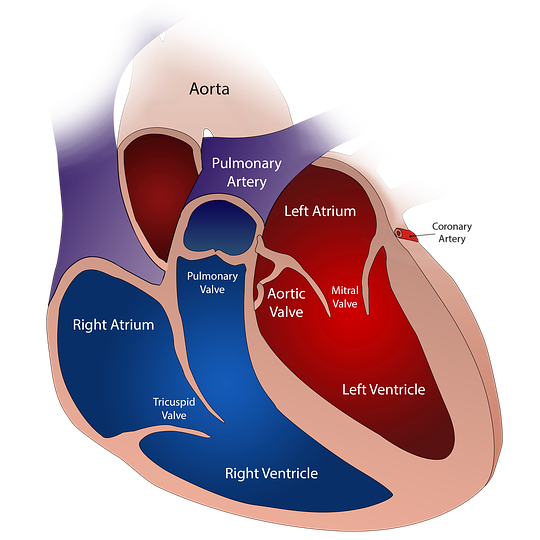

The cardiovascular system, also known as the circulatory system, is a vital organ system responsible for transporting blood, nutrients, oxygen, carbon dioxide, hormones, and other essential substances throughout the body. It plays a central role in maintaining homeostasis, supporting cellular function, and enabling the body to respond to internal and external changes.
At the core of the cardiovascular system are three main components:
1. Heart – a muscular organ that acts as a pump to circulate blood.
2. Blood Vessels – a vast network of arteries, veins, and capillaries that carry blood to and from all parts of the body.
3. Blood – a fluid that transports oxygen, nutrients, waste products, and immune cells.
1. Transport: Delivers oxygen and nutrients to tissues and removes waste products like carbon dioxide and urea.
2. Protection: Circulates white blood cells and antibodies for immune defense.
3. Regulation: Helps regulate body temperature, pH levels, and fluid balance.
i. Heart
1. Divided into four chambers: two atria and two ventricles.
2. Pumps oxygen-poor blood to the lungs (pulmonary circulation) and oxygen-rich blood to the body (systemic circulation).
ii. Blood Vessels
1. Arteries carry blood away from the heart (typically oxygen-rich).
2. Veins return blood to the heart (typically oxygen-poor).
3. Capillaries allow exchange of gases, nutrients, and waste between blood and tissues.
i. Three Main Types of Blood Vessels
Each type has a specific structure and function:
Arteries
1. Carry blood away from the heart.
2. Typically transport oxygen-rich blood (except pulmonary arteries).
3. Have thick, muscular, and elastic walls to handle high pressure from the heart's pumping action.
Veins
1. Carry blood toward the heart.
2. Usually transport oxygen-poor blood (except pulmonary veins).
3. Have thinner walls and valves to prevent backflow, especially in limbs.
Capillaries
1. The smallest blood vessels.
2. Connect arterioles and venules.
3. Have thin walls (one cell thick) to allow efficient exchange of gases, nutrients, and waste between blood and tissues.
ii. Layers of Blood Vessel Walls
Most blood vessels (except capillaries) have three layers:
1. Tunica Intima – inner lining made of endothelial cells; smooth surface for blood flow.
2. Tunica Media – middle muscular layer; controls vessel diameter and blood pressure.
3. Tunica Externa (Adventitia) – outer layer of connective tissue; provides strength and flexibility.
iii. Blood Flow Regulation
1. Vasoconstriction: Narrowing of blood vessels to reduce blood flow and increase pressure.
2. Vasodilation: Widening of blood vessels to increase blood flow and reduce pressure.
3. Regulated by the autonomic nervous system, hormones, and local tissue signals.
iv. Specialized Vessels
Pulmonary arteries and veins are unique:
1. Pulmonary arteries carry deoxygenated blood from the heart to the lungs.
2. Pulmonary veins carry oxygenated blood back to the heart.
Portal veins (e.g., hepatic portal vein) carry blood between two capillary beds (from the intestines to the liver).
v. Blood Pressure and Circulation
1. Arteries have higher blood pressure than veins.
2. Capillary networks slow down blood flow to allow exchange of substances.
3. Veins rely on valves, skeletal muscle contractions, and respiratory movements to return blood to the heart.
vi. Disorders Involving Blood Vessels
1. Atherosclerosis: Plaque buildup in arteries.
2. Aneurysm: Weakening and bulging of a vessel wall.
3. Varicose veins: Enlarged, twisted veins due to valve failure.
Thrombosis: Blood clot formation inside a vessel.
Cardiovascular disease (CVD) is a general term for conditions that affect the heart and blood vessels. It is a leading cause of death globally and includes a range of disorders, many of which are preventable or manageable with lifestyle changes and medical care.
i. Coronary Artery Disease (CAD)
1. Narrowing or blockage of the coronary arteries due to atherosclerosis.
2. Can lead to angina (chest pain) or heart attack (myocardial infarction).
ii. Hypertension (High Blood Pressure)
1. Chronic elevation of blood pressure.
2. Increases the risk of heart attack, stroke, kidney damage, and aneurysm.
iii. Heart Failure
1. The heart cannot pump enough blood to meet the body’s needs.
2. Can result from CAD, hypertension, or cardiomyopathy.
iv. Arrhythmias
1. Irregular heartbeats (e.g., atrial fibrillation, ventricular tachycardia).
2. May cause palpitations, dizziness, or sudden cardiac arrest.
v. Stroke
1. Interruption of blood supply to the brain (ischemic or hemorrhagic).
2. Often related to high blood pressure or blood clots.
vi. Peripheral Artery Disease (PAD)
1. Blocked or narrowed arteries in the limbs, usually the legs.
2. Causes pain during walking (claudication).
vii. Congenital Heart Disease
1. Structural heart defects present at birth.
viii. Cardiomyopathy
1. Disease of the heart muscle affecting its size, shape, or strength.
Diffraction of sound waves is the phenomenon where sound waves bend around obstacles or spread out after passing through narrow openings. This bending occurs because sound waves have wavelengths comparable to everyday objects and openings, making diffraction easily observable in our daily lives.
Cardiovascular imaging
[1]. Raichel, D.R., 2006. The science and applications of acoustics. Springer Science & Business Media.
[1]. Cardiovascular
